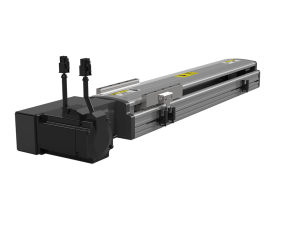
A stepper motor that fails in a linear module is rarely a random event. In most cases, the burnout is the end result of a chain of conditions that were present long before the winding insulation gave way. Understanding those conditions—and correcting them—is the difference between a module that runs for years and one that becomes a recurring maintenance item.
Below are the primary causes of stepper motor burnout in linear module applications, along with the design and operational factors that prevent them.
1. Overcurrent and Improper Driver Current Settings
The most direct path to a burned stepper motor is excessive current through the windings. Stepper motors are designed to run at or near their rated current, but the setting on the driver is frequently adjusted upward in pursuit of more torque.
Research on stepper-driven actuators has shown that when drive current exceeds the optimal value, motor temperature rise increases significantly. In one controlled test, reducing drive current from 2.0 A to 1.4 A on a motor rated for higher current lowered temperature rise by 9.3°C, while still meeting positioning requirements. The relationship is straightforward: current produces heat, and heat degrades insulation.
A practical rule from stepper driver documentation: after setting current, run the motor for 15–30 minutes and monitor temperature. If the motor housing exceeds 70°C, the current setting must be reduced. Many burnout failures trace back to a current setting that was “turned up” to solve a torque problem that had a different root cause entirely.
2. Mechanical Overload and Binding
A stepper motor does not reduce its current when load increases. Unlike a DC motor, it draws the same current regardless of whether it is moving freely or fighting a binding guide rail. When the mechanical resistance in the linear module exceeds what the motor can overcome, the motor stalls—but it continues drawing full current, converting all of that electrical energy into heat rather than motion.
Common mechanical causes of excessive resistance in a linear module include:
-
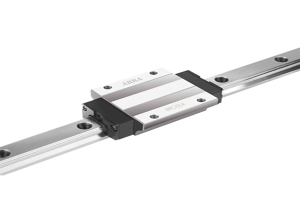
Guide rail contamination or inadequate lubrication: metal chips, dust, or dried grease increase sliding friction
-
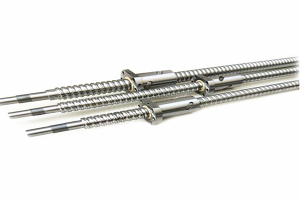
Ball screw misalignment or excessive preload: binding in the screw support bearings or nut
-
Coupling failure or looseness: causing intermittent binding or loss of transmission
-
Rail parallelism errors: forcing the carriage into a bind condition
When a motor is repeatedly run into a mechanical bind, the winding insulation is subjected to sustained thermal stress. Eventually, it fails.
3. Insufficient Duty Cycle and Cooling
Stepper motors are often selected for their holding torque and simplicity, but their thermal limitations are frequently underestimated. A motor running continuously at high current in an enclosed module with poor airflow will accumulate heat faster than it can dissipate it.
The duty cycle of the application matters enormously. A motor that runs intermittently with adequate off-time between moves can tolerate higher current settings than one that runs continuously. If the motion profile leaves no thermal recovery period, the winding temperature will climb until insulation breakdown occurs. This is particularly relevant in linear modules used for continuous scanning, pick-and-place, or indexing applications where the motor is almost always energized.
4. Supply Voltage and Driver Faults
Incorrect supply voltage can damage both the driver and the motor. If input voltage exceeds the driver’s rated maximum, the driver may fail in a way that sends uncontrolled current to the motor. Conversely, severely undervoltage conditions can cause the driver to lose commutation control, leading to erratic current flow through the windings.
Driver protection circuits exist for exactly this reason. Many stepper drivers will indicate overcurrent or overvoltage conditions via fault LEDs before permanent damage occurs. Ignoring these indicators or bypassing protection features is a direct path to motor failure.
5. Moisture, Contamination, and Insulation Degradation
The winding insulation in a stepper motor is thin. Moisture ingress—whether from coolant splash, high-humidity environments, or condensation—reduces insulation resistance and can lead to short circuits between adjacent windings. In severe cases, the motor may fail immediately; more often, the insulation degrades gradually until a thermal event completes the failure.
Chemical exposure is another factor. In applications where the motor is exposed to oils or process fluids, the insulating layer on the magnet wire can be attacked over time, particularly if the motor runs hot. Elevated temperature accelerates the permeation of contaminants through insulation materials, further shortening motor life.
Prevention: What to Check Before the Motor Fails
Set current correctly, then verify by temperature. Start at or below the motor’s rated current. Run the application under its normal load profile for 30 minutes. If the motor housing is too hot to touch comfortably (above roughly 70°C), reduce the current or improve cooling.
Address the mechanical root cause of stalls. If the motor is stalling, the problem is almost never “not enough current.” Check rail lubrication, ball screw alignment, and coupling condition first. Increasing current to overcome a mechanical bind simply moves the failure point from the mechanism to the motor.
Provide thermal headroom. Enclosed modules with no airflow need either a lower current setting or a larger motor. A motor running at 80% of its thermal limit is living on borrowed time.
Inspect for contamination paths. If coolant or dust can reach the motor, add a shield or relocate the motor. Insulation failure from contamination is preventable and often invisible until the motor is already damaged.
Respect driver fault indicators. A flashing fault LED is telling you something. Diagnose it before resetting and running again.
Conclusion
Stepper motor burnout in a linear module is almost always a system-level problem manifesting at the motor. The motor is the component that fails, but the cause usually lives in the current setting, the mechanical condition of the module, the duty cycle assumptions, or the operating environment. Addressing those factors is more effective—and far less expensive—than replacing motors on a recurring basis.
Areswin Precision Machinery Co., Limited, located in Xi ‘an, Shaanxi, is a national high-tech enterprise integrating R&D, design, manufacturing, sales and service. The company has a perfect production process and management system, and the products have completely independent intellectual property rights. With large-scale processing equipment and testing instruments, it ensures that the products are qualified and leave the factory to escort your equipment.
The company focuses on various types of linear modules, linear motors, DD motors, variable-pitch modules, electric sliding tables, multi-axis precision platforms, platform customization, module accessories: ball screws, linear guides, etc., and can customize non-standard equipment modules and mechanical equipment according to customer needs. Products are widely used in lithium battery, photovoltaic, energy storage equipment, semiconductor equipment, 3C electronics, solar energy equipment, medical equipment, automotive electronics and other automation industries. Help all kinds of automation equipment to land efficiently and stably. Look forward to cooperating with you.
If you are specifying a linear module and want to confirm that the motor selection and drive settings are appropriate for your duty cycle, our application engineers can review your motion profile and load conditions. Send us your operating parameters for a selection review.